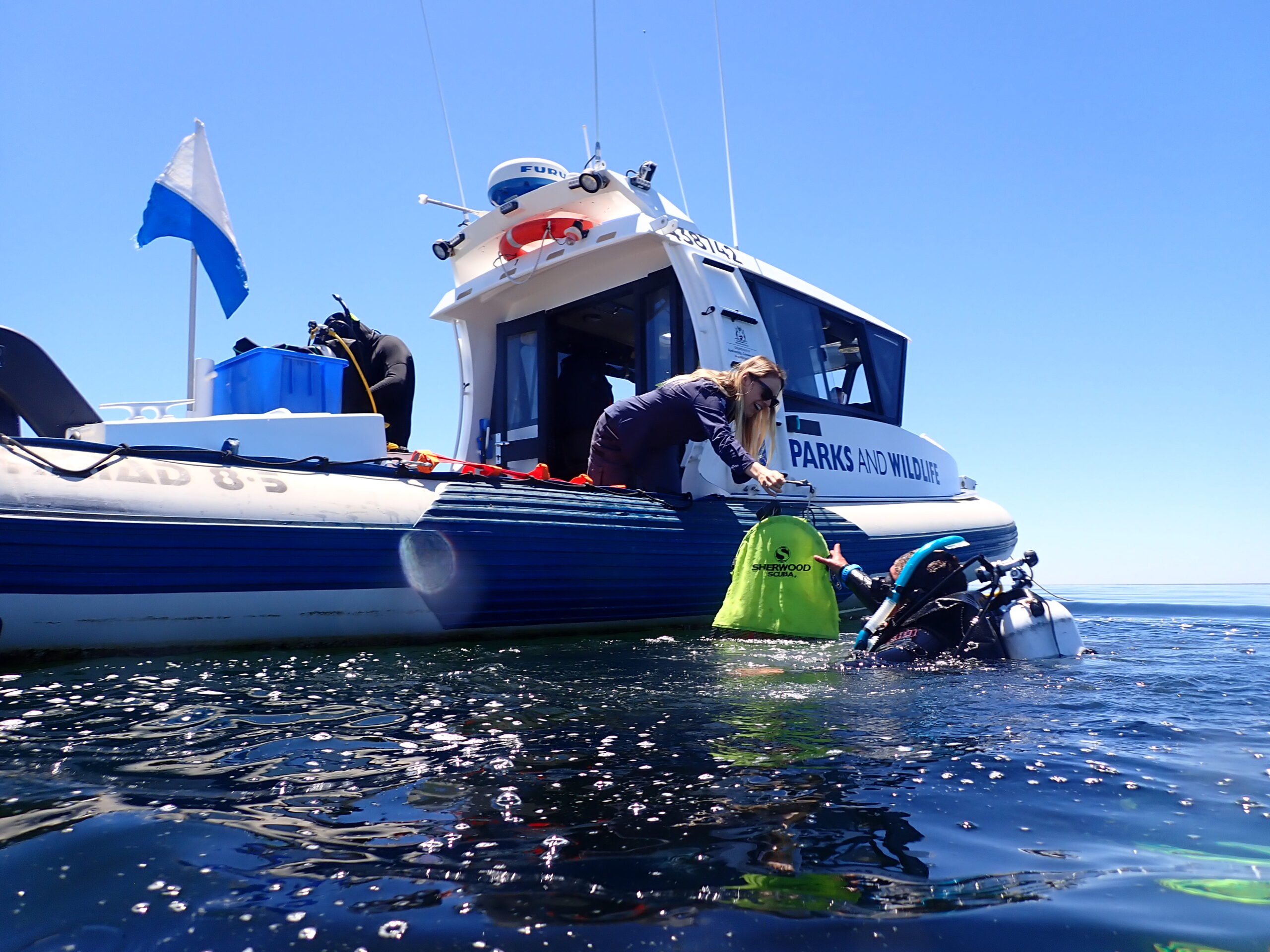
Scientists from Edith Cowan University have been undertaking seagrass research in Geographe Bay and are encouraged by the latest results. The scientific scuba divers were out and about in Geographe Bay to continue with the 13th consecutive year of sampling.
Each summer, scientists from Edith Cowan University join divers from the Department of Biodiversity, Conservation and Attractions to monitor the seagrass meadows at fixed sites across Geographe Bay. The program aims to assess seagrass health by tracking changes over time.
Results this year are yet to be fully assessed, but Professor Kathryn McMahon from Edith Cowan University says the Bay’s seagrass meadows appear to be in good condition with no areas of concern. All sites have been monitored across the bay and early indications show that shoot density is slightly higher than 2023, a positive sign.
“Most of the sites are located within the Ngari Capes Marine Park so they are an indicator of marine park health. At each site, we monitor the number of shoots of seagrass. The number of shoots is a really good indicator of their health. We are finding that most of the sites in Geographe are staying stable, and some are increasing in shoot density over time. That is an indication that their condition is improving,” said Kathryn.
The KeepWatch seagrass monitoring project is coordinated by GeoCatch and funded by Water Corporation, with in-kind support from the Department of Biodiversity, Conservation and Attractions. The 2023 KeepWatch Seagrass Monitoring Report by Edith Cowan University summarised that “seagrass meadows in Geographe Bay remain healthy with seagrass shoot densities high at all sites compared to other similar meadows in Western Australia.”
GeoCatch Chair Vicky Winton was encouraged by the early results of the 2024 monitoring. “A long-term monitoring project like this gives the community confidence that the water quality we enjoy in Geographe Bay really is as good as it looks. The project includes testing for environmental management trigger points that will raise the red flag if the seagrass meadows underpinning the ecology of the bay start to decline. The long-term picture from Keep Watch seagrass monitoring is a really big, good news story for our bay,” said Vicky.
To view the results of the previous years monitoring, visit https://geocatch.asn.au/keepwatch-seagrass-monitoring/
Photo 1: Kathryn McMahon from the ECU KeepWatch seagrass monitoring team dives into Geographe Bay. Photo by ECU.
Photo 2: Scientific scuba divers monitoring Geographe Bay seagrass. Photo by ECU.