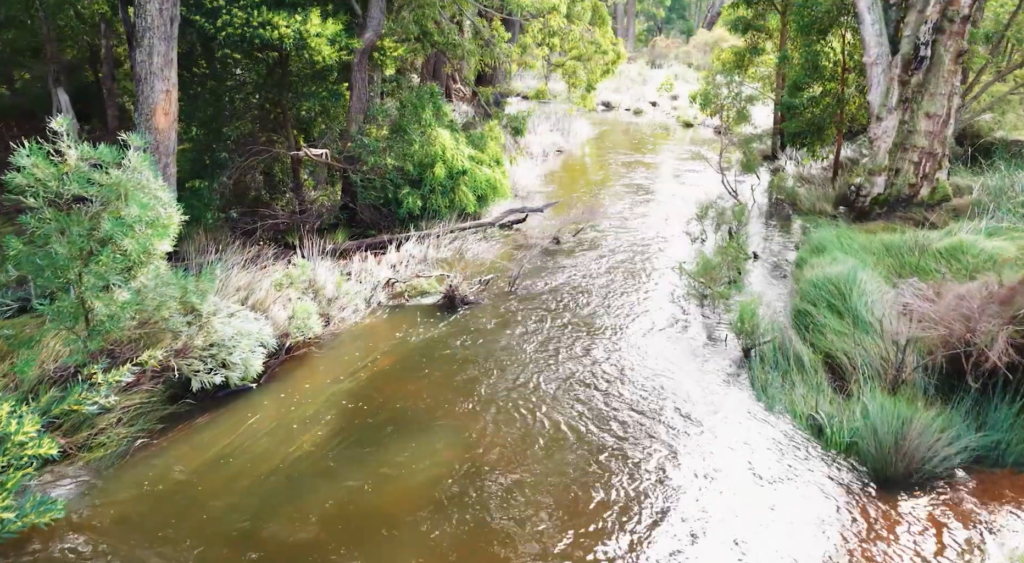
Interested in restoring a stream on your property but not sure where to start?
GeoCatch’s Restoring Our Waterways video series takes landholders step‑by‑step through the process of planning, designing and delivering a successful stream restoration project. Featuring expert advice and practical demonstrations, the series follows the restoration journey from start to finish, helping you understand what works, avoid common challenges and achieve lasting results for your waterway.
Across the series, you’ll learn how to plan your project, prepare your site, install waterway fencing, carry out effective revegetation, protect young plants and maintain your restoration over time.
Browse the videos below to build your knowledge, gain confidence and take action to improve the health of waterways across the Geographe Catchment.
Episode 1
Introduction
The first video in GeoCatch’s Restoring our Waterways series introduces why rivers, streams and creeks are so important in the Geographe catchment.
This episode explains how healthy waterways support clean water, biodiversity and a resilient landscape and why actions like riverbank restoration, fencing waterways and revegetation make such a difference.
Episode 2
Waterways and Country
The second video in GeoCatch’s Restoring our Waterways series explores the importance of waterway restoration in the Geographe catchment.
Zac Webb from Undalup Association, provides a First Nations context for restoration, sharing how cultural knowledge, deep connections to Country and long‑standing care for waterways guide Noongar approaches to protecting these systems.
Episode 3
Planning
The third video, in GeoCatch’s Restoring our Waterways series, steps through the basics of planning a successful project.
This episode outlines what to consider before getting started, from understanding your site to identifying constraints, to mapping your project using free online software.
Episode 4 Part 1: Introduction Part 2: building a box strut
Fencing
The fourth episode, in GeoCatch’s Restoring our Waterways series, has two parts. Part 1 looks at the role of fencing waterways in any restoration project and explains why fencing is one of the most effective ways to protect riparian areas.
It also steps through different fencing styles and materials, helping landholders choose the right option for their site and long‑term management.
In Part 2, we take a practical look at how to build a box strut: a strong, reliable end assembly that keeps your waterway fencing standing straight and secure over time.
We walk through the full process from start to finish, including the materials you’ll need, how to set out your posts, and the steps to construct a sturdy box strut.
Episode 5
Site Preparation
The fifth video in GeoCatch’s Restoring our Waterways series focuses on the essential steps of preparing your site before any on‑ground restoration begins.
This episode outlines how to manage weeds and get the ground ready for successful revegetation projects. By understanding and preparing a site early, landholders can set up their project for long‑term success.
The sixth video in GeoCatch’s Restoring our Waterways series focuses on getting seedlings in the ground so they have the best chance of surviving and thriving.
This episode steps through the essentials of planting for success, from planting techniques, spacing, and early‑stage care.
Episode 7
Protecting Your Plants
The seventh video in GeoCatch’s Restoring our Waterways series focuses on protecting young plants so they have the best chance of surviving and thriving along your waterway.
This episode steps through the different types of tree guards available, from simple plastic sleeves to mesh guards and heavy‑duty options, and explains when and where each style works best.
Episode 8
Maintaining Your Plants
The eighth and final video in GeoCatch’s Restoring our Waterways series focuses on maintaining young trees so they establish well and continue to thrive along your waterway.
This episode outlines the key steps in ongoing care, from weed control and checking soil moisture, to monitoring for pests and signs of disease. It also covers simple actions landholders can take to support healthy growth in the crucial early years, helping ensure their revegetation becomes a strong, resilient part of long‑term waterway restoration.
This project is supported by the Australian Government through funding from the Climate-Smart Agriculture Program under the Natural Heritage Trust.