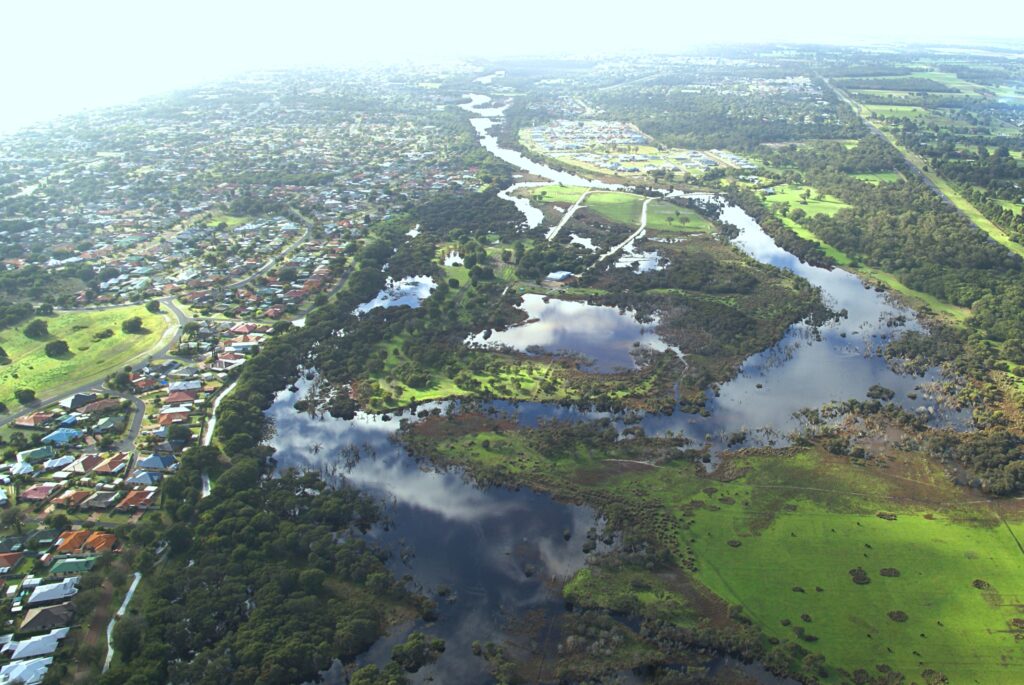
The Vasse Wonnerup Wetlands are gearing up for another summer of international visitors, with waterbirds preparing to make their annual pilgrimage from their breeding grounds in the northern hemisphere to Busselton. Thousands of birds migrate back and forth across the globe each year, using the South West as one of their main feeding grounds during our summer. They spend the warmer months feeding on the insects, crustaceans, worms, and algae of the Vasse Wonnerup wetlands, before returning to the northern hemisphere to breed and start the process all over again.
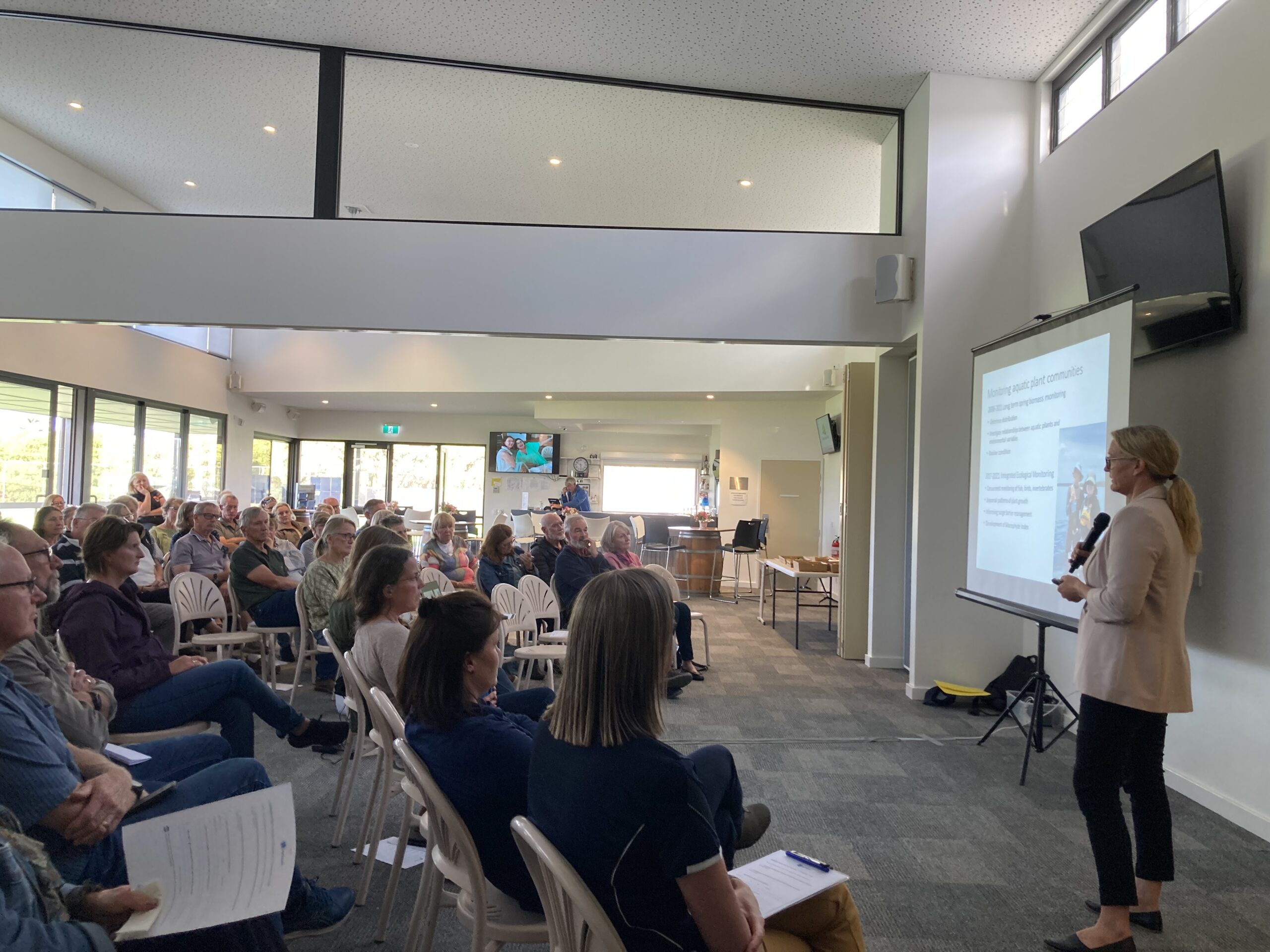
Located on Busselton’s doorstep, the Vasse Wonnerup wetlands are one of 67 Ramsar listed wetlands in Australia and are recognised on an international level for their conservation, social and cultural values. Scientific research is crucial to understanding and protecting the wetlands, and on Thursday night over 70 people gathered at the Busselton Tennis Club to hear the latest science updates.
Hosted by GeoCatch, Dr Robyn Paice started the evening with a summary of the ongoing monitoring of aquatic plants in the wetlands, and their importance to maintaining a healthy ecosystem. “Aquatic plants provide a range of functions in a healthy system. They provide habitat and nesting material for fauna, are the base of the food web, and they maintain water quality as they consume nutrients, stabilise and oxygenate sediments,” said Robyn.
Dr James Tweedley, from Murdoch University, presented his team’s research on how fish and invertebrates can be an indicator of the health of the Vasse Wonnerup Wetlands. “Black Bream are iconic speices and complete their lifecycle in the estuary. They spawn in the Deadwater and the number of juveniles recorded helps track the population size over time and are a good indicator of the water quality below the surge barriers. We also monitor the invertebrates upstream, they are excellent indicators and their presence is important for maintaining bird populations” said James.
Christine Taylor from Department of Biodiversity, Conservation and Attractions is part of a team that monitors waterbird numbers. “Vasse Wonnerup is one of the key feeding sites for migratory shorebirds in southwestern Australia. Every year, thousands of shorebirds migrate between their breeding grounds in Alaska and Siberia and their non-breeding grounds in Australia and New Zealand. These birds begin arriving in late spring, with peak numbers seen in late summer when water levels drop. Our maximum bird count was over 25,000 individuals using the wetland system at one time,” said Christine.
This project is delivered by GeoCatch, as part of Healthy Estuaries WA and Revitalising Geographe Waterways. These State Government initiatives aim to support the long-term health of our south-west estuaries. To stay informed of upcoming events, register at the GeoCatch website.
Photo 1: Sally Clifton-Parks, Dr James Tweedley, Vicky Winton, Christine Taylor, Dr Robyn Paice
Photo 2: Dr Robyn Paice presenting findings on the ecology of the Vasse Wonnerup wetlands