Last month, GeoCatch and the Lower Blackwood LCDC teamed up to delivery ‘Trees that Work’, led by renowned agroforestry educator Rowan Reid. Rowan is one of Australia’s leading voices in agroforestry and farm forestry, and over two days, presented how trees can be used to build productive, resilient and biodiverse farming landscapes.
Day One introduced participants to the practical side of integrating trees into productive farming systems. The session explored how strategically placed trees can support livestock welfare, improve soil and water management, and strengthen whole‑farm planning for long‑term resilience.
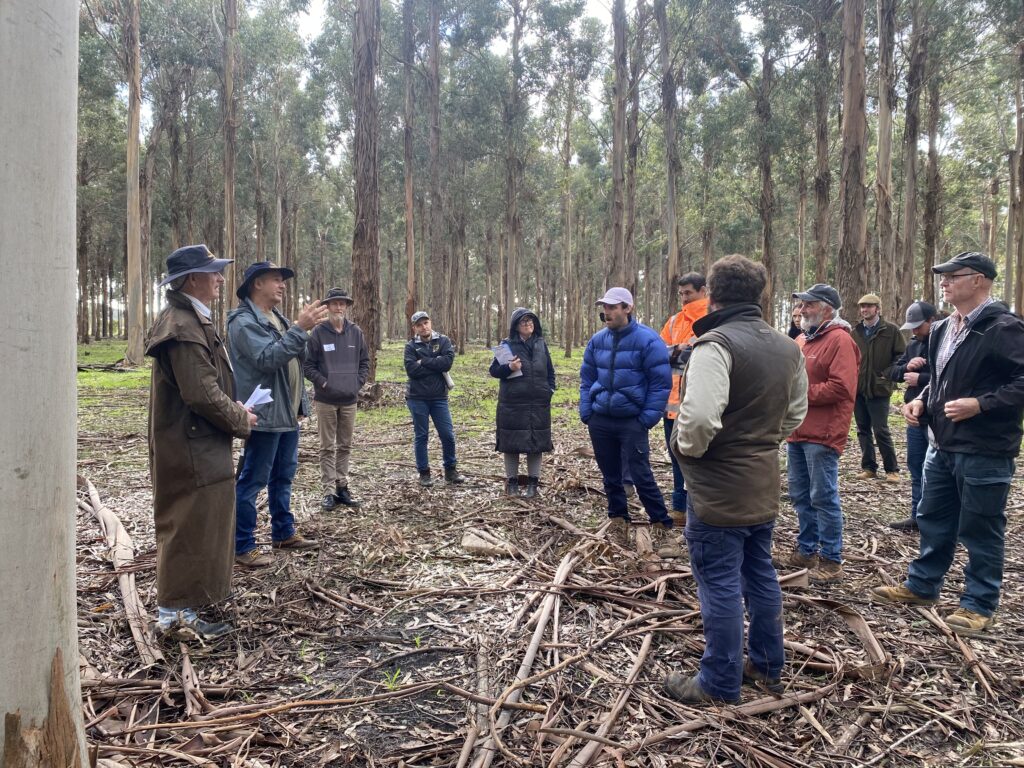
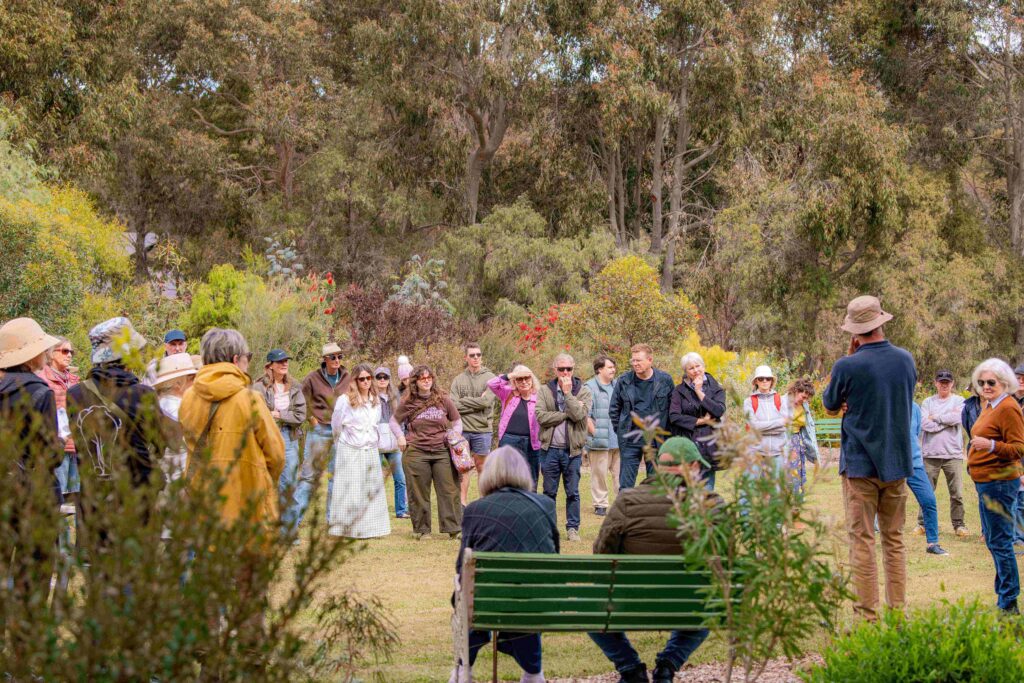
Photo: Being on site, brought a great discussion between Rowan and participants on the value of productive trees on farm and within a landscape.
Day Two focused on utilising trees to increase productivity of pasture/crop yields and livestock health with shelterbelts and habitat corridors for shade, shelter, wind protection and biodiversity.
Well‑designed shelterbelts can reduce wind speed for up to 20 times their height, creating calmer microclimates that support pasture growth and reduce moisture loss. Even though there may be a small zone of competition close to the trees, the overall protected area is much larger — meaning most paddocks see a net gain in productivity.
Shelterbelts can reduce livestock energy requirements during cold, windy conditions, helping maintain weight, wool growth and milk production (see image below). Shade and shelter also reduce heat stress in summer, improving animal welfare and reducing feed demand.
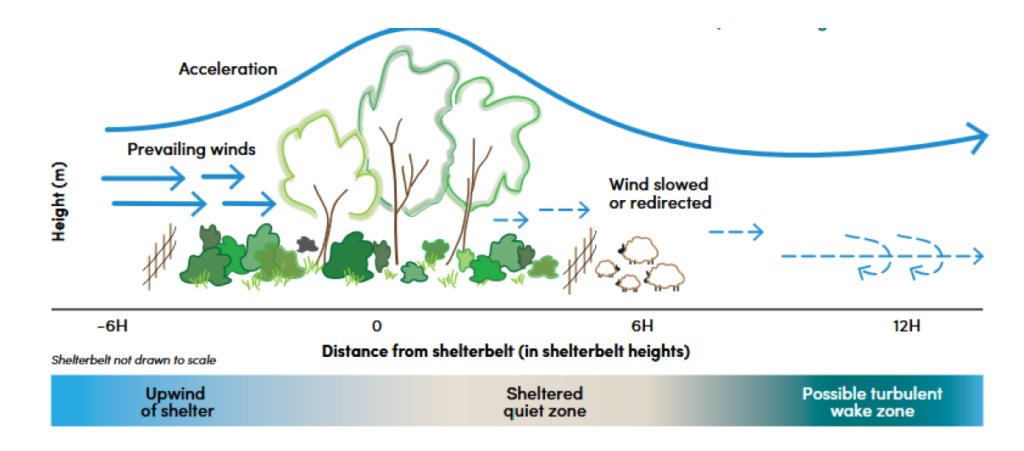
Wind protection can lift yields in the sheltered zone, depending on plant type and local conditions. Reduced wind stress means less lodging, better moisture retention and stronger early growth, benefits that often outweigh the small strip of land taken out of production.
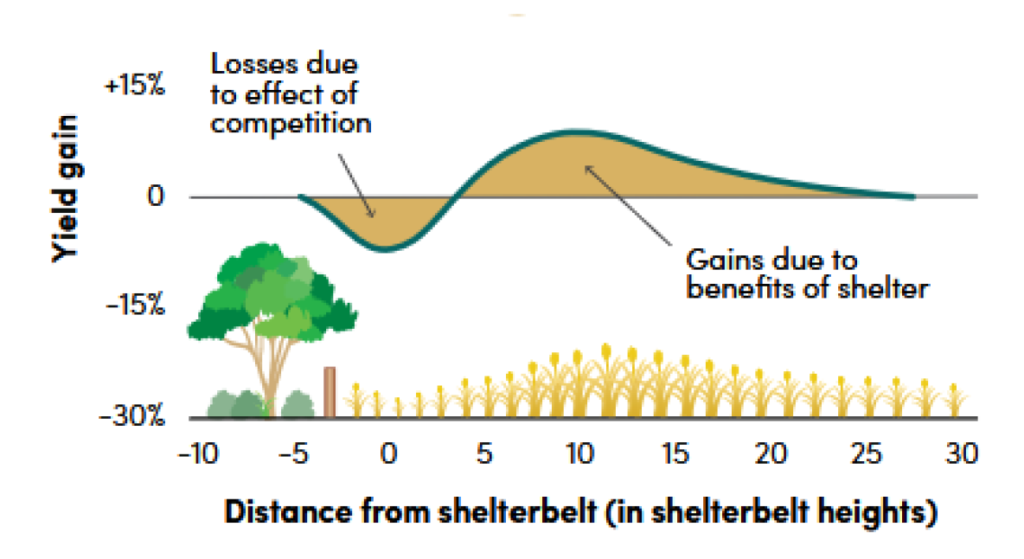
Wind protection can lift yields by 5–15% in the sheltered zone (figure above), depending on plant type and local conditions. Reduced wind stress means less lodging, better moisture retention and stronger early growth, benefits that often outweigh the small strip of land taken out of production.
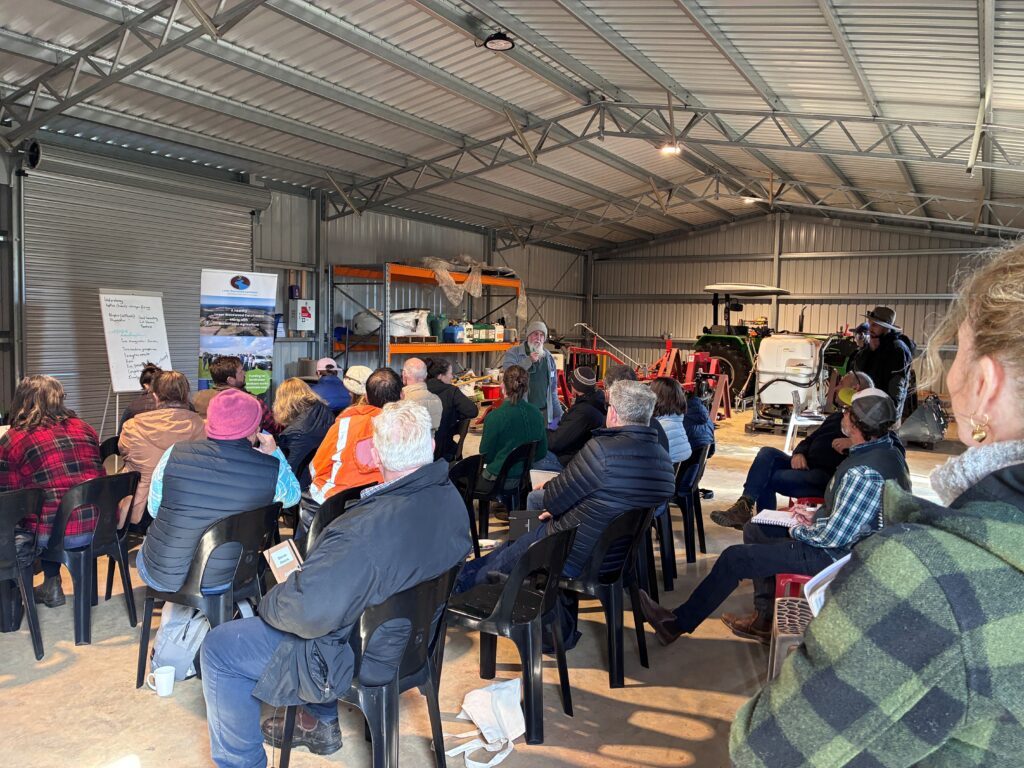
Photo: Rod Cary from Geographe Community Landcare Nursery, brought a local context to Rowan’s presentation, talk through the local endemic plant species that would be suitable for shelter belts, in differing soil types and conditions.
All this and we haven’t started talking about biodiversity yet! Even narrow corridors can reconnect fragmented habitat, support pollinators, and increase beneficial insect activity, all of which contribute to healthier, more resilient farming systems.
Click here to more about Rowan’s work on agroforestry and the how trees can work in a farming context visit.
Day One was supported by the Australian Government through funding from the Climate-Smart Agriculture Program under the Natural Heritage Trust.